


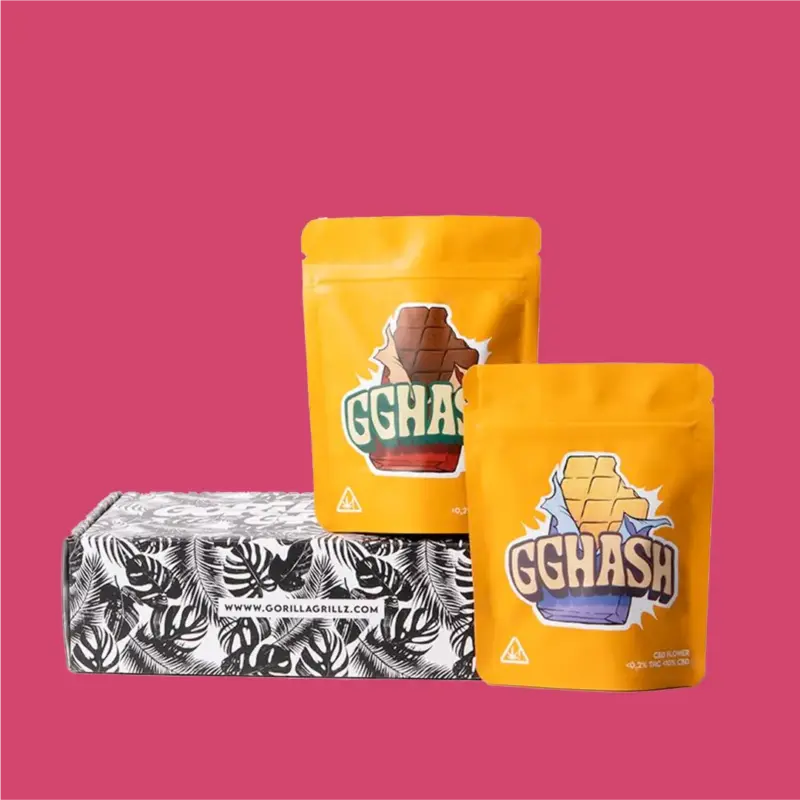
In the cannabis universe, there is an astonishing diversity of strains, each with its own identity marked by different characteristics that make them unique: their shape and color, their aroma, their terpene and cannabinoid profile, and the proportions or CBD:THC ratios they contain. By this we mean the relationship between the two best-known cannabinoids and the amounts of each contained in a hemp flower or other by-product. The ratio between CBD and THC has become an essential reference to understand the characteristics and potential of each variety. Some are distinguished by a high CBD content and minimal amounts of THC; others, on the contrary, show a profile where THC predominates. There are also special varieties with a 1:1 ratio, which combine both compounds in balance. CBD flowers each bring their own particular nuances and benefits, offering alternatives designed for different preferences, from those seeking a more serene experience to those who value greater potency that takes advantage of the natural synergy of these compounds.
What is the difference between CBD and THC?
CBD and THC are phytocannabinoids, i.e. cannabinoids found in plants. We could say that they are, in fact, the most known, used and researched cannabinoids. Both compounds acquire their effects through interaction with the endocannabinoid system, a large set of receptors in the body involved in various body functions. Although they have this characteristic in common, it is precisely in their interaction with the endocannabinoid system where they acquire their most important differences.
THC binds directly to CB1 and CB2 receptors, especially in the central nervous system, generating characteristic psychoactive effects and modulating functions such as appetite or perception. CBD, on the other hand, does not bind directly to these receptors, but it does act as a modulator of them and many other receptors in the body. This could allow it to influence multiple biological pathways, including enzymes, ion channels and other receptors such as serotonin and vanilloid receptors. This versatility has attracted a great deal of scientific interest, as it is investigated for its potential for a wide range of effects, from supporting the body’s internal balance to its role in modulating inflammatory or pain responses. Together, both cannabinoids present complementary mechanisms that can interact synergistically, a phenomenon known as the entourage effect.
Why mix THC and CBD?
Although it is true that it is possible to find broad-spectrum or isolated CBD products that do not contain THC, many users prefer their formulas to include this cannabinoid, even in very low amounts. This is due to the so-called “entourage effect” or “entourage”, which states that cannabinoids and other compounds present in the plant may work better together than separately (Russo, 2011). Under this perspective, THC and CBD, together with terpenes and other phytocannabinoids, would interact synergistically to potentiate and balance their effects. Thus, even small amounts of THC can influence how the body processes CBD, modulating its benefits and providing nuances that many consider valuable for a more complete and personalized experience.
What is the ratio of CBD to THC?
The CBD:THC ratio indicates the ratio between the amount of CBD and THC in a dose. A 1:1 ratio implies that the amounts of CBD and THC are equal. A 20:1 ratio indicates that there is 20 times more CBD than THC. Adjusting this ratio allows you to customize the product, taking advantage of the unique effects of both cannabinoids for a variety of purposes that can range from wellness, medicinal or recreational. Keep in mind that recreational uses of cannabis are not authorized in many territories, and medicinal uses can only be done with specific products and professional accompaniment. Always make sure to check the legislation of your country and state to make responsible use of THC and CBD products.
What are the most common CBD:THC ratios?
Genetic selection in the recreational cannabismarket has traditionally increased THC levels and reduced CBD. This provides more intense psychoactive effects but can lead to unwanted side effects.
In contrast, interest in hemp for wellness and medical cannabis research has changed this trend, encouraging specific CBD:THC ratios where cannabidiol is predominant. When it comes to legal products in Spain, they contain a maximum of 0.2% THC.
This evolution has led to a focus on plant breeding and the creation of products with higher CBD:THC ratios.
CBD:THC 0:1
Cannabis strains with a CBD:THC ratio of 0:1 are not common, but strains close to this ratio are known for their potent psychoactive effects. These strains are high in THC and low in CBD, offering intense euphoria, but also the risks associated with THC.
CBD:THC 1:2
In markets and territories where they are legal, strains with a CBD:THC ratio of 1:2 are the most common in recreational settings. They offer a milder and more gradual psychoactive effect, ideal for beginners. This ratio allows for greater control over the experience. Higher levels of CBD can mediate some of the psychoactive effects of THC and reduce its side effects.
CBD:THC 1:1
Cannabis strains with a 1:1 ratio of CBD to THC offer effects and a balanced experience of both molecules. This type of strain is ideal for those looking for more functional and calming effects, more focused on everyday wellness than psychoactive potency. Although not as common as recreational strains, they are growing in demand and are relatively easy to find in countries where their use is legal, with some seed banks specializing in developing these varieties.
CBD:THC 2:1
Cannabis strains with a CBD:THC ratio of 2:1 produce more subtle effects, suitable for sensitive users or those who desire a balanced presence of both cannabinoids without a strong psychoactive impact. These types of strains, while not the primary choice for traditional recreational users, are gaining popularity and beginning to gain prominence in some markets around the world, even being available in some coffeeshops in the Netherlands.
CBD:THC 1:0
Although 0% THC cannabis strains do not exist, breeders have managed to develop strains with minimal THC levels, approaching a 1:0 ratio. These strains provide the benefits of CBD without the psychoactive effects, making them ideal for those who do not desire the effects of THC and prefer to enjoy the benefits of CBD alone. These strains with up to 0.2% THC are the ones that can be legally marketed in Spain, and are what you will find in products such as CBD flowers or full-spectrum oils.
What does the science say about THC:CBD binding?
Research on the combination of THC and CBD has grown in recent years, exploring their possible interactions and joint benefits. In the field of inflammation and the immune system, some studies suggest that the combined action of cannabinoids and terpenes could modulate the inflammatory response. For example, Voicu et al. (2019) highlighted the role of these two cannabinoids, together with some of their more common terpenes, in modulating inflammatory processes in experimental models, offering valuable clues for future research.
This is an ever-developing field: In 2019, researcher Ethan Russo compiled studies showing how full-spectrum extracts (containing THC and other cannabinoids) can offer similar or superior responses to isolated CBD, with lower amounts and better overall tolerance, in areas as diverse as pain regulation and emotional well-being. These findings support the idea that products that retain both CBD and THC, even in low ratios, may provide a balance between efficacy and safety, and that it is possible to access the benefits of the entourage effect without the need for THC:CBD ratios containing a lot of THC.
What percentage of THC is in hemp products with CBD?
In Spain, legal CBD products must contain a maximum of 0.2% THC. Full-spectrum and broad-spectrum CBD products meet this requirement and, to verify this, specialty stores like Gorilla Grillz include access to lab certificates proving this in their online stores. Isolated CBD products, on the other hand, should theoretically contain no THC. If you are interested in buying quality and legal cbd, visit our website and browse our catalog.
Bibliography and Digital Sources
-
Gibson, L. P., Karoly, H. C., Ellingson, J. M., Klawitter, J., Sempio, C., Squeri, J. E., Bryan, A. D., Bidwell, L. C., & Hutchison, K. E. (2022). Effects of cannabidiol in cannabis flower: Implications for harm reduction. Addiction biology, 27(1), e13092. https://doi.org/10.1111/adb.13092
-
Gibson, L. P., Mueller, R. L., Winiger, E. A., Klawitter, J., Sempio, C., Williams, S., Bryan, A. D., Bidwell, L. C., & Hutchison, K. E. (2024). Cannabinoid Exposure and Subjective Effects of THC and CBD in Edible Cannabis Products. Cannabis and cannabinoid research, 9(1), 320-334. https://doi.org/10.1089/can.2022.0020
- Martin-Santos, R., Crippa, J. A., Batalla, A., Bhattacharyya, S., Atakan, Z., Borgwardt, S., Allen, P., Seal, M., Langohr, K., Farré, M., Zuardi, A. W., & McGuire, P. K. (2012). Acute effects of a single, oral dose of d9-tetrahydrocannabinol (THC) and cannabidiol (CBD) administration in healthy volunteers. Current pharmaceutical design, 18(32), 4966-4979. https://doi.org/10.2174/138161212802884780
- Russo E. B. (2011). Taming THC: potential cannabis synergy and phytocannabinoid-terpenoid entourage effects. British journal of pharmacology, 163(7), 1344-1364. https://doi.org/10.1111/j.1476-5381.2011.01238.x
-
Zou, S., & Kumar, U. (2018). Cannabinoid Receptors and the Endocannabinoid System: Signaling and Function in the Central Nervous System. International journal of molecular sciences, 19(3), 833. https://doi.org/10.3390/ijms19030833
SOUTHERN PHARMA SPAIN S.L. assumes no liability for the use by third parties of the content of the website and may exercise all civil or criminal actions that apply in case of infringement of these rights by the user. It is absolutely forbidden to use the website or any of its elements for illicit purposes. The benefits and properties of cbd that could be read on the website www.gorillagrillz.com , in no case are attributed to the products sold on the website. CBD products are not medicines and should not replace treatments with these. What you can read on our website are not official medical statements but references to preclinical studies. If you have any doubt, you can consult with a professional health personnel. We remind you that in Spain CBD products are for topical use. All products have THC<0.2% analysis according to the royal decree 1729/1999.