





What is CBG?
CBG: The parent cannabinoid
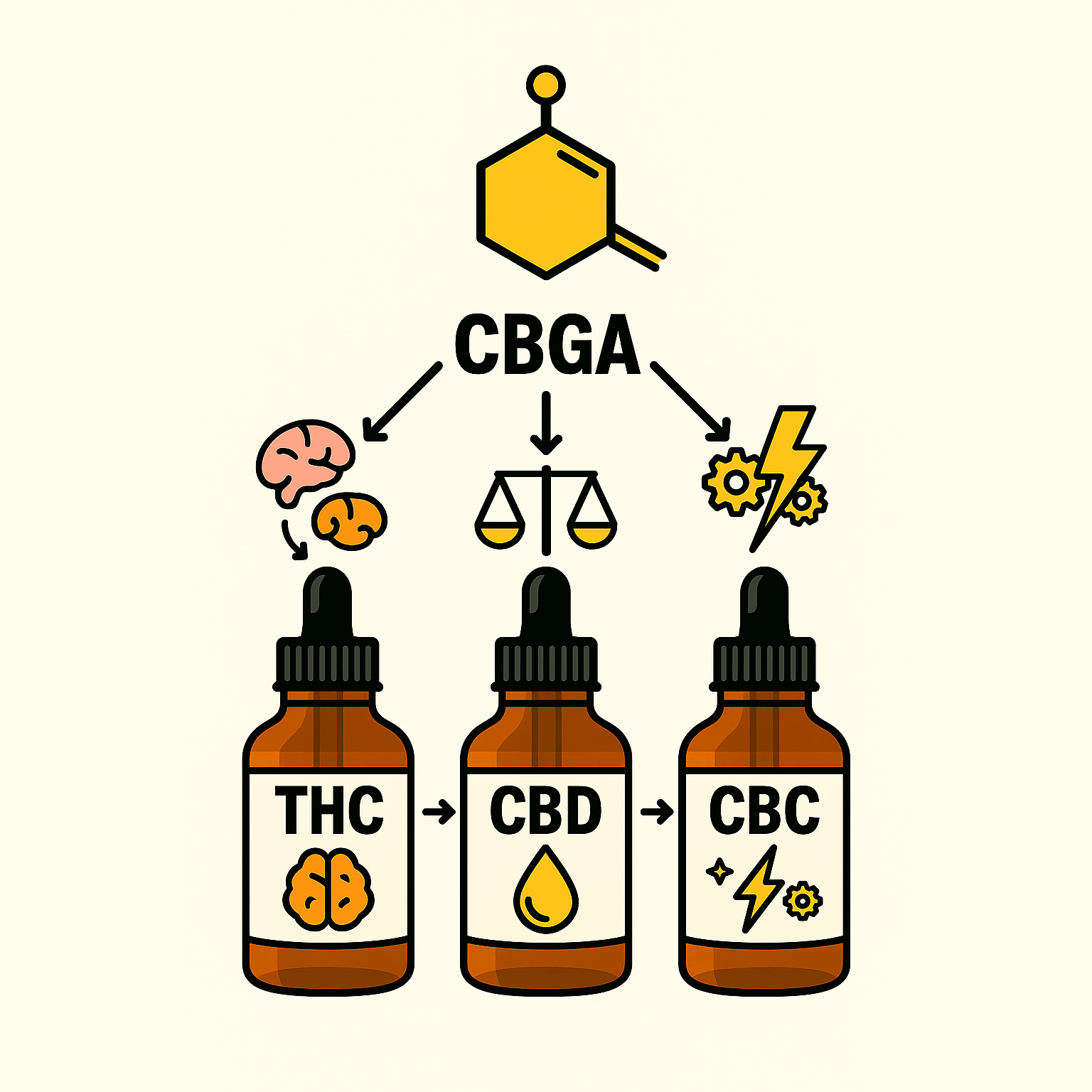
Cannabigerol, known as CBG, is a non-psychoactive phytocannabinoid found in the cannabis plant. It was identified in the 1960s by researcher Raphael Mechoulam, but for years it went unnoticed due to the greater attention received by other compounds such as THC and CBD, in addition to its low concentrations in the plant. At the biochemical level, CBG stands out for being the direct precursor of the best-known cannabinoids: both tetrahydrocannabinol (THC) and cannabidiol (CBD) are derived from their acid form, cannabigerolic acid (CBGA).

How it is formed and why it is so rare in plants
The process that converts CBGA into other cannabinoids is mediated by specific enzymes that act during the development of the plant. These enzymes progressively transform CBGA into THCA, CBDA or CBCA, acidic compounds that can then be converted into their neutral forms (THC, CBD, CBC) by processes such as heating or natural aging. Only a small part of CBGA escapes this transformation, which explains why CBG is found in such small quantities.
This phenomenon made CBG a scarce and valuable molecule for many years. The limitation in its availability not only poses technical challenges for its procurement, but also increases its scientific interest as a cannabinoid with therapeutic potential and still little explored.
Advances in its cultivation and extraction
Faced with the difficulty of obtaining CBG in relevant quantities, researchers and growers have sought alternatives to increase its presence in plants. In 2019, scientists at the Polytechnic University of Valencia managed to develop cannabis strains that produce high levels of CBG, above 15%, by partially blocking the enzymatic pathways that normally transform it into other cannabinoids.
This breakthrough was achieved without resorting to genetic engineering, but through selective crossbreeding and plant breeding techniques. The result has been the creation of strains that retain high levels of CBGA during maturation, thus facilitating more efficient and economically viable extraction. Thanks to these improvements, CBG has gone from being a rarity to becoming an accessible compound for research and targeted product development.


How CBG is used
Most common presentations
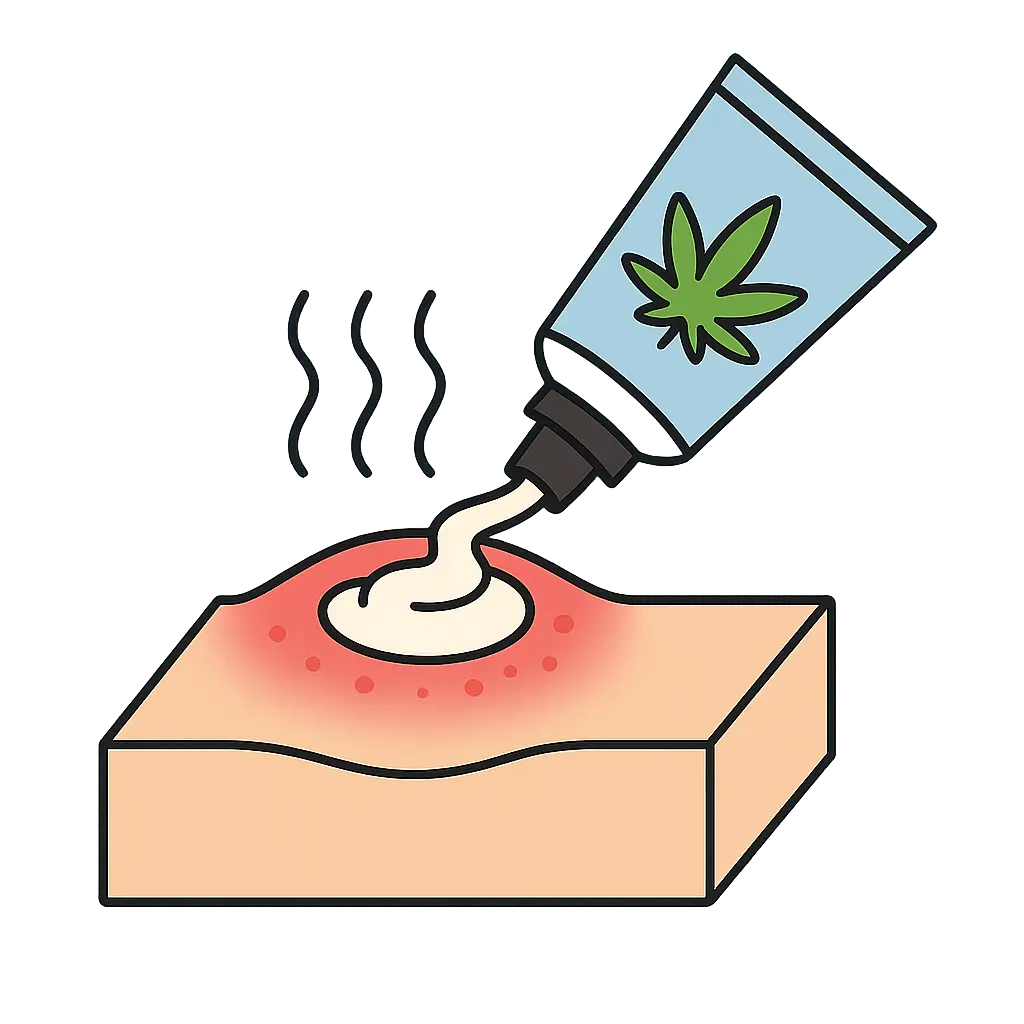
Currently, the most common forms of CBD are oils, tinctures, capsules or concentrated extracts. There are also presentations for external use, such as creams, balms or ointments, designed to be applied on the skin.
Each format has its advantages. For example, an oil may be more useful if you are looking for a general effect on the body, while a cream serves to relieve specific areas. It is important to remember that legislation on the use of CBG and other cannabinoids may differ in different territories. For example, although here we will talk about oral and sublingual use, these uses are not legally permitted in Spain. Check the laws of your country or region before using CBG or any other cannabinoid.
Oral vs. topical route: key differences
CBG can be used orally or applied to the skin, and each option has particular characteristics. When consumed orally, it first passes through the digestive system and liver, which may decrease the amount that eventually reaches the blood. Even so, it is useful when a broader or prolonged effect is sought.
Topical application, on the other hand, acts directly on the desired area, without the need to pass through the digestive system. This makes it ideal for localized discomfort, such as muscle pain or skin treatments. The choice between one or the other depends on what you want to use it for and what result you expect.
Combinations with CBD and other cannabinoids: entourage effect
In many products, CBG does not appear alone. It is commonly combined with other cannabinoids, such as CBD, to take advantage of what is known as the “entourage effect”. This theory holds that cannabis compounds can enhance their effects when they act together, rather than separately.
In addition to other cannabinoids, CBG is also often mixed with natural ingredients such as essential oils, plant extracts or vitamins. These combinations aim to adapt the product to different purposes, such as relieving stress, supporting rest or treating chronic complaints.


How CBG is obtained
From the plant to the active compound: decarboxylation
CBG does not appear in the “ready-to-use” plant. What is actually found is its acidic version, known as CBGA. In order for this compound to be activated and utilized by the body, it needs to go through a process called decarboxylation. Although the name sounds complex, the idea is simple: when heat is applied, CBGA is transformed into CBG. This change can occur naturally over time, but in most cases it is preferred to use heat in a controlled manner during extraction to ensure that the process is complete and effective.
Getting this step right is critical. If the temperature is not high enough, some of the CBG may remain unactivated; if it is too high, the compound may degrade. Therefore, finding the right balance is key to achieving a good quality product.
Extraction challenges and process costs
One of the main obstacles to obtaining CBG is its scarce presence in most cannabis strains. Being in very small quantities, it is necessary to process large volumes of plant to gather a significant amount. This, naturally, makes the whole process more expensive. In addition, separating it from the rest of the components requires precise techniques, such as chromatography, which require specialized equipment and controlled conditions.
For a long time, this severely limited the availability of CBG. However, the development of new cannabis strains specially bred to produce more CBG has begun to change the landscape. Thanks to these advances, it is now easier and more cost-effective to access this cannabinoid.
What properties does CBG have according to science?
Increased availability of CBG has allowed scientists to focus their studies on its unique potential relative to other cannabinoids. The following are some of those findings, coming primarily from studies and reviews of studies developed by Li et al. in 2024 and Calapai et al. in 2022.
The ability of CBG to modulate inflammation has been one of the most studied aspects in recent years. In animal models of inflammatory diseases, such as colitis, it has been observed that CBG can reduce intestinal inflammation, decrease the activity of proinflammatory enzymes and balance the production of cytokines, molecules involved in inflammatory processes.
These effects suggest that CBG could have applications in conditions where chronic inflammation plays a key role. While the results are preliminary, they provide a solid basis for further investigation of its use in these types of conditions.
Oxidative stress is a process linked to cellular aging and various chronic diseases. CBG has shown an interesting ability to combat this by acting as an antioxidant. Studies at the cellular level have shown that it can reduce the production of free radicals and increase the activity of enzymes that delay aging. Thanks to these properties, CBG has been proposed as a possible ally in the treatment of diseases related to oxidative damage, such as neurological or even cardiovascular conditions, but it could also have great potential in the field of cosmetics and personal care.
Pain relief is another potential benefit of CBG that has aroused interest in the scientific community. In studies with animal models, it has been observed that its administration can reduce pain perception in certain contexts. In addition, it has been observed to have effects on andamide, a molecule that influences the regulation of pain, anxiety and appetite. These findings place CBG as a potential adjunct in pain management, especially in people seeking natural alternatives to conventional analgesics.
Increasing antibiotic resistance has motivated the search for new antimicrobial agents. In this context, CBG has shown interesting activity against resistant bacteria such as methicillin-resistant Staphylococcus aureus (MRSA). Studies indicate that its action could be due to the alteration of the bacterial membrane, weakening the cellular structure of the microorganism.
These results have raised expectations about its potential use in disinfectant products, antibacterial creams or complementary treatments in difficult-to-treat infections. However, further research is required to determine its efficacy and safety in clinical settings.
The skin could also benefit from the use of CBG. Research in cell lines has revealed that this cannabinoid regulates genes involved in the proliferation and differentiation of keratinocytes, cells essential for epidermal regeneration. These effects could be mediated by epigenetic changes in gene expression.
In addition, it has been observed that CBG can reduce inflammation in skin cells and decrease sebum production, two key factors in the development of acne. These properties, together with its potential antioxidant action, make CBG an attractive candidate for inclusion in cosmetics and dermatological products for conditions such as psoriasis, acne or skin aging.
CBG has been the subject of several studies exploring its potential in more specific, but equally promising, areas. In the neurological field, for example, effects have been observed that could be considered protective for the nervous system. Some studies in the laboratory and in animal models suggest that this cannabinoid may help protect neurons against damage caused by inflammatory or oxidative processes, having potential for controlled clinical applications even in complex neurodegenerative diseases (Granja et al., 2012).
But its scope does not end there. CBG has also been studied in the context of diseases such as colorectal cancer or glioblastoma. Although this is still early research, it has been shown that it could slow the growth of tumor cells. Other preclinical studies show that it could reduce intraocular pressure, which would make it a candidate for treating glaucoma, and it has also been suggested that it could play an interesting role in certain urinary disorders by reducing bladder contraction in experiments with isolated tissues.
Although many of these findings come from early stages of research, they all point in the same direction: CBG is a compound with a wide range of biological effects, whose versatility continues to arouse the interest of the scientific community.



Conclusion: The promising future of the CBG
Although still at a relatively early stage of research, CBG is emerging as a cannabinoid of great therapeutic interest. Its properties observed in preclinical models and the increasing availability of strains rich in this compound open new possibilities for its study and application.
With a wide range of effects ranging from anti-inflammatory to neuroprotective, CBG is gaining prominence in the world of cannabis science. As the clinical evidence base expands and more accessible products are developed, this cannabinoid could establish itself as a valuable alternative in the repertoire of cannabinoids used in wellness.
David Vazquez
Head Ecommerce CBD Sector for over 10 years
References
- Appendino, G., Gibbons, S., Giana, A., Pagani, A., Grassi, G., Stavri, M., … & Rahman, M. M. (2008). Antibacterial cannabinoids from Cannabis sativa: a structure- activity study. Journal of natural products, 71(8), 1427-1430.
- Brierley, D. I., Whalley, B. J., & Williams, C. M. (2013). Modulation of feeding behaviour by the non-psychoactive phytocannabinoid cannabigerol. Proceedings of Pharmacology, 2013. London: British Pharmacological Society.
- Calapai, F., Cardia, L., Esposito, E., Ammendolia, I., Mondello, C., Lo Giudice, R., Gangemi, S., Calapai, G., & Mannucci, C. (2022). Pharmacological Aspects and Biological Effects of Cannabigerol and Its Synthetic Derivatives. Evidence-based complementary and alternative medicine : eCAM, 2022, 3336516. https://doi.org/10.1155/2022/3336516
- Formukong, E. A., Evans, A. T., & Evans, F. J. (1988). Analgesic and anti-inflammatory activity of constituents of Cannabis sativa L. Inflammation, 12(4), 361-371.
- Deiana, S. (2017). Potential medical uses of cannabigerol: a brief overview. Handbook of Cannabis and Related Pathologies, 958-967.
- Gaoni, Y., & Mechoulam, R. (1964). Isolation, structure, and partial synthesis of an active constituent of hashish. Journal of the American chemical society, 86(8), 1646-1647.
- Granja, A. G., Carrillo-Salinas, F., Pagani, A., Gómez-Cañas, M., Negri, R., Navarrete, C., Mecha, M., Mestre, L., Fiebich, B. L., Cantarero, I., Calzado, M. A., Bellido, M. L., Fernandez-Ruiz, J., Appendino, G., Guaza, C., & Muñoz, E. (2012). A cannabigerol quinone alleviates neuroinflammation in a chronic model of multiple sclerosis. Journal of neuroimmune pharmacology : the official journal of the Society on NeuroImmune Pharmacology, 7(4), 1002-1016. https://doi.org/10.1007/s11481-012-9399-3
- Li, S., Li, W., Malhi, N. K., Huang, J., Li, Q., Zhou, Z., Wang, R., Peng, J., Yin, T., & Wang, H. (2024). Cannabigerol (CBG): A Comprehensive Review of Its Molecular Mechanisms and Therapeutic Potential. Molecules (Basel, Switzerland), 29(22), 5471. https://doi.org/10.3390/molecules29225471
- Ligresti, A., Moriello, A. S., Starowicz, K., Matias, I., Pisanti, S., De Petrocellis, L., Laezza, C., Portella, G., Bifulco, M., & Di Marzo, V. (2006). Antitumor activity of plant cannabinoids with emphasis on the effect of cannabidiol on human breast carcinoma. The Journal of pharmacology and experimental therapeutics, 318(3), 1375-1387. https://doi.org/10.1124/jpet.106.105247
- Russo, E. B., Cuttler, C., Cooper, Z. D., Stueber, A., Whiteley, V. L., & Sexton, M. (2021). Survey of Patients Employing Cannabigerol-Predominant Cannabis Preparations: Perceived Medical Effects, Adverse Events, and Withdrawal Symptoms. Cannabis and Cannabinoid Research.
- Universitat Politècnica de València (2019, July 30). Without psychoactive components: The UPV develops, in collaboration with the Valencian company Hemp Trading, the first legal cannabis strain with high medicinal potential. https://www.upv.es/noticias-upv/noticia-11098-sin-componente-es.html
DISCLAIMER: SOUTHERN PHARMA SPAIN S.L. assumes no liability for the use by third parties of the content of the website and may exercise all civil or criminal actions that apply in case of infringement of these rights by the user. It is absolutely forbidden to use the website or any of its elements for illicit purposes. The benefits and properties of cbd that could be read on the website www.gorillagrillz.com , in no case are attributed to the products sold on the website. CBD products are not medicines and should not replace treatments with them. What you can read on our website are not official medical statements but references to preclinical studies. If you have any doubts, you can consult with a health professional. We remind you that in Spain CBD products are for topical use. All products have THC analysis<0.2% according to the royal decree 1729/1999.